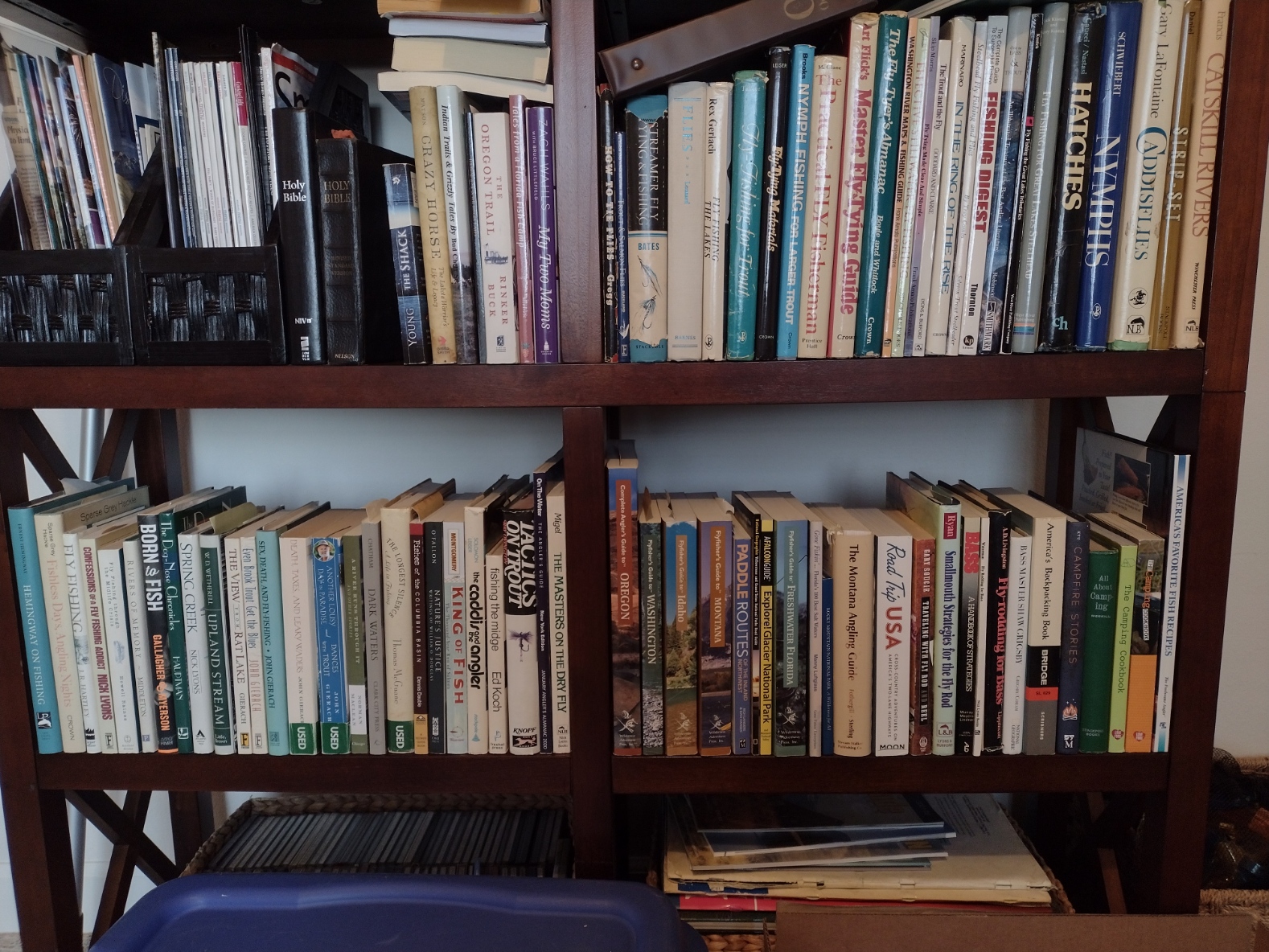
I enjoy watching fly fishing related videos and pod casts, including the Slide Inn Podcast with Kelly Galloup. One thing that keeps me coming back to this channel is Kelly’s discussion of how we learned the aspects of fly fishing “back in the day”. He is in his mid-60s and about 10 years younger than me, so I can relate to what he describes. In the 60s and 70s we had no internet and our learning came from books and mentors (family members, fly club members). We poured through books of old-time masters like Brooks, Bates, Flick, and McClane, along with the “new” studies by Schwiebert, Caucci & Nastasi, LaFontaine, Swisher & Richards, Marinaro, and Whitlock. We learned the Latin names for the aquatic ‘bugs” that trout eat, their life cycles and hatching activity. We studied the recipes and pictures of the flies these experts designed that we copied as best we could. Essentially, we absorbed their words and pictures from the books and tried to apply the learnings on the water. That is, we had to figure it out from the abstract to the living world.
Today’s young/new anglers have the answer to any question at his fingertips (keyboard) with video to demonstrate the minutest detail. YouTube videos that will take you through the building of a killer fly pattern wrap by wrap or how to read the currents of a river while the teacher is actually standing in the river. I’m not suggesting that becoming a competent angler is easy. You still have to go out and master the techniques on the water, but the knowledge, nuances, and variables are all laid out for you. There are seemingly fewer mysteries to figure out. If there is something you don’t understand from one video, you just ask AI to find you another that has the answer.
Let me be clear, I am not giving an old man rant about how “back in my day we had it tough”. I think it is great and I readily use these modern resources myself, particularly with fly tying. The speed with which new technology allows for the advancement in technique and equipment is amazing. What I am trying to convey is what new anglers miss today is the satisfaction of “figuring it out”. The deep dive into an aspect of entomology or fly craft, then the creativity to apply the knowledge to be successful. I guess what I’m saying there is pleasure in the journey, the effort. In that aspect I actually have sympathy for today’s learning anglers for not having the need to make that long of a journey.
In a recent podcast Kelly talked about the “Ah Ha” moments when you do figure it out or when the real world validates what you’ve learned. As I was thinking about this a few memories of such times have come to mind and I would like to share a few. The first two involve a specific mayfly hatch in the Catskill Mountains. I’m going to use some Latin so don’t freak out.
Fishing a fly as the living insect
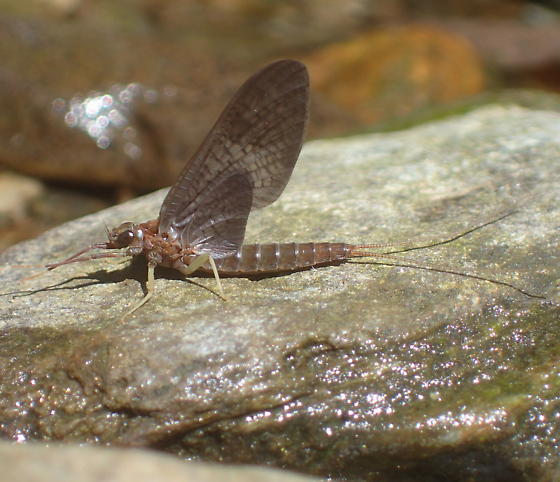
In the early part of summer in New York’s Catskill Mountains there is a mayfly of the Family: Baetidae, Genus: Isonychia, Species: bicolor or commonly called Leadwing Coachman or Slate Drake, among other names. This family of mayflies are known as The Swimmers because they tend to swim freely about as opposed to clinging under rocks.
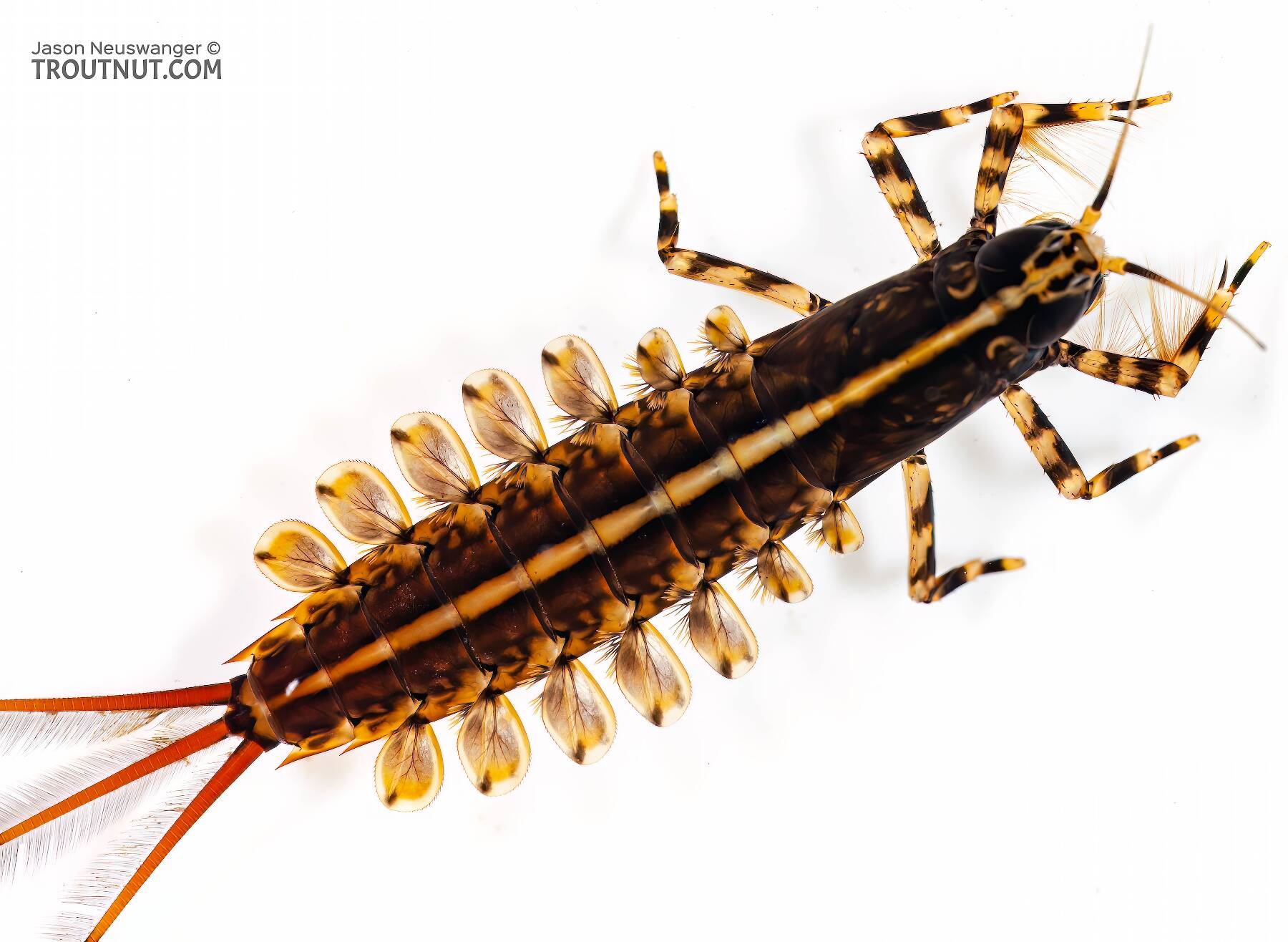
She’s a beauty, right? Beside their ability as strong swimmers, their emergence or hatching activity is different from most mayflies that rise to the water surface with the adult (dun) emerging from the nymphal shuck. These nymphs migrate to the shore to climb out of the water on rocks or plants for the duns to emerge.
During one of our early June trips to the Catskills, Mike Krol and I parked along Old Hwy 17 where it sits high above the Beaverkill River where I-17 crossed above us. As we were surveying the run below, I noticed a trout rising tight against the rocks directly across the river. By the amount of disturbance with each rise, it seemed like a good size fish. After pointing it out to Mike I hurried to rig my rod and tie on a new fly Mike developed, appropriately called the Krolly Bug that I had tied to imitate a Drake emerger. I scrambled, actually slide, down the high bank to the river and proceeded to cross as fast as the slippery rocks would allow. When I got within 30 feet I started stripping the appropriate amount of fly line from my real and started working out my cast to land tight against the rock bank about 3 feet above the rising trout. I want to say the trout took my fly on the first cast, but it might have been the second. Either way the fight was on with a beautiful 16-inch Beaverkill River brown trout.
I can still feel the satisfaction as if it was yesterday, for taking the knowledge from the deep dives we made into the local entomology and trout behavior from all the books we read before that day. Mike and I studied those things with more intention than any textbooks we had in high school or college, so when we saw the trout behavior against the rocks and knew the Drakes should be emerging at that time and that location, we knew instantly what was happening and how to approach the situation to successfully catch that trout.
On another trip to the Catskills, this time the West Branch Delaware River at the same time of year. I was fishing a new-to-me stretch on my own and not having much luck. As I recall, it was overcast and threatening rain that morning as I surveyed the surroundings after fishing unsuccessfully for a couple of hours. I came to a spot where tall grass or reeds grew along the bank and as I contemplated what to do, I thought about the Drakes that should be hatching that time of year or at least migrating toward that grass to eventually crawl out of the water and hatch. So, I tied on a freshly tied Drake nymph, cast it up against the grass and as the fly sunk and floated down stream, I began wagging my rod tip rapidly side to side hoping to impart a darting/swimming motion to the fly. Happily, this did the trick as I caught a few rainbows along that bank. Again, the same feeling of satisfaction for figuring out how to solve a problem made that morning a memory, which has stayed with me for decades.
I have other memories of figuring out solutions like the trip to the Main Stem Delaware with friends from our Trout Unlimited Chapter on an unseasonably warm November weekend. All of us were stumped in two days of fishing and finally in the last hour before leaving I figured it out. The guys were standing along the road above the river quietly, I’m sure, wishing I would call it a weekend so we could head back to Rochester, but I really hate to quit when I haven’t solved the problem. Just then I started looking closer at what I thought were trout rising to very small flied I couldn’t see. It dawned on me that this was November and the Delaware River has a mixture of rainbow and brown trout. The browns spawn in the fall, so I theorized the surface disturbance was their tails not trout sipping bugs on or near the surface. These were rainbows eating brown trout eggs in the flow! I tied on a small egg pattern, which I had brought thinking this might happen only to forget all about it when I thought trout were rising the whole weekend, and proceeded to catch a half-dozen rainbows one after the other. I was more excited to have solved the problem than catching those fish, however, my fishing partners were probably more annoyed than anything else.
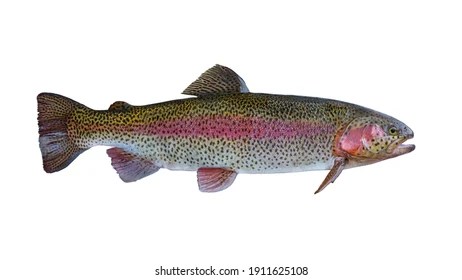
learning the solution when it is visible
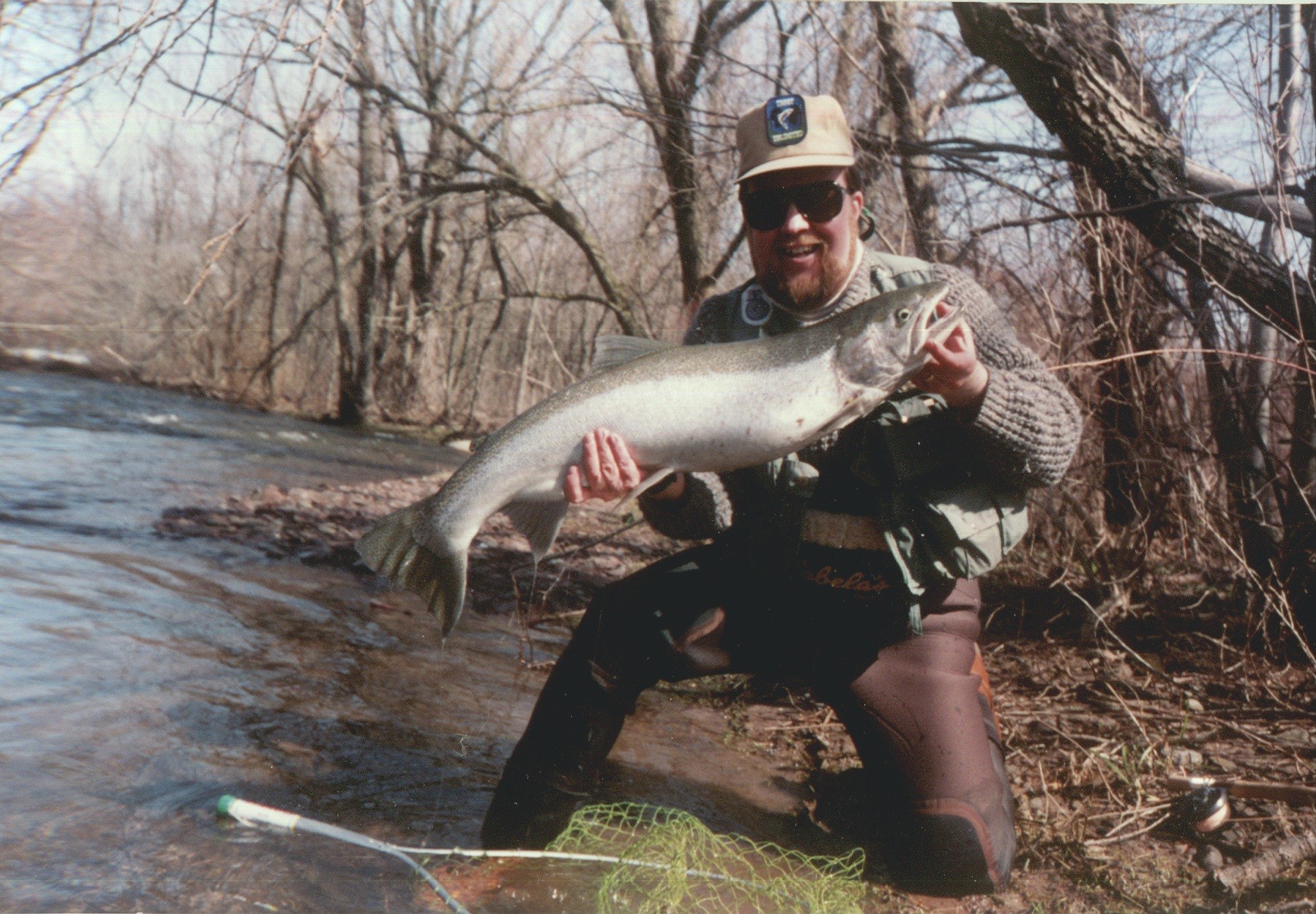
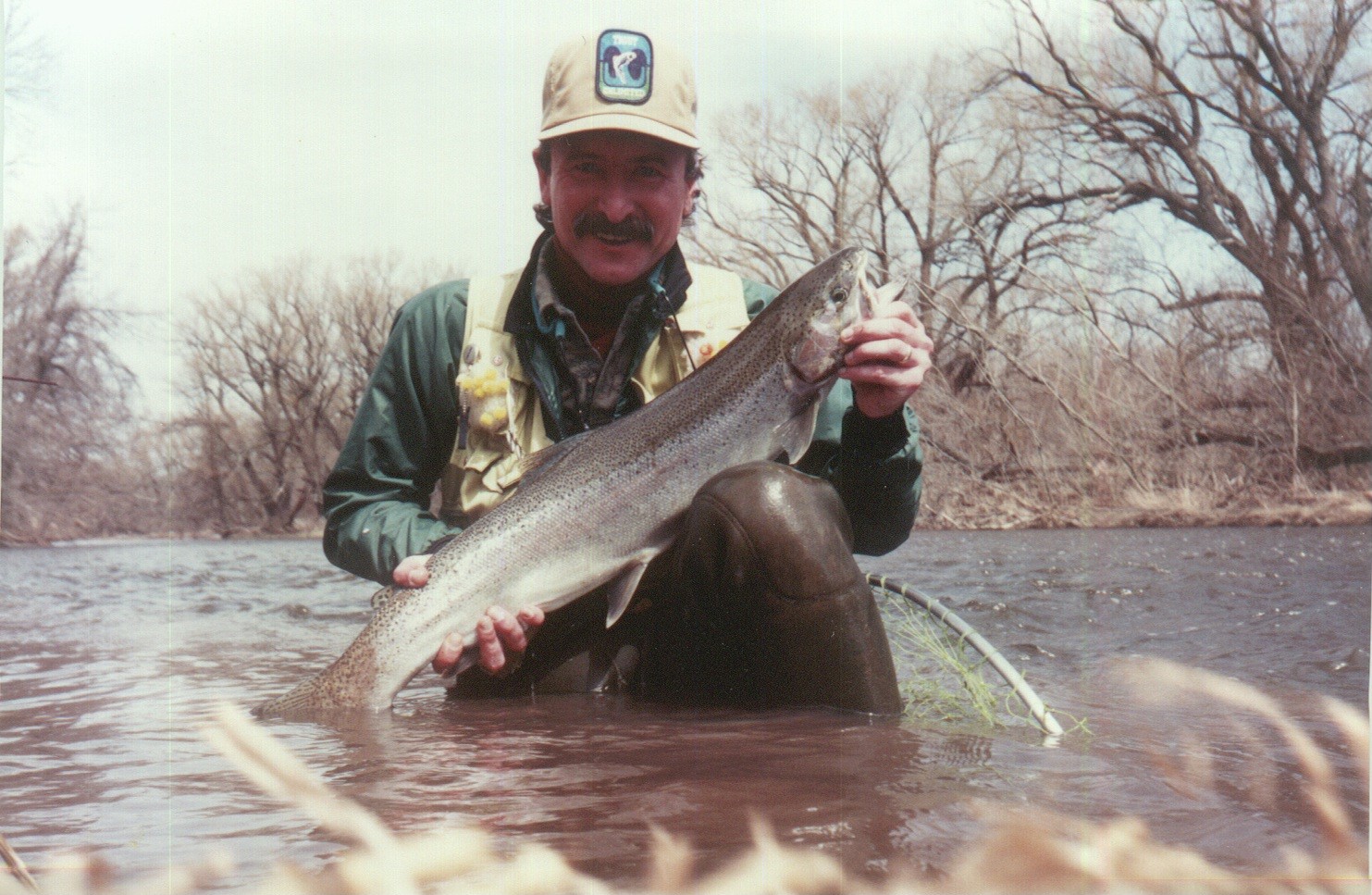
Finally, I’ll share a time when Mike and I were heavily involved in fishing for brown trout and steelhead migrating up a certain tributary of Lake Ontario near Rochester, NY. When I say “heavily involved”, I mean to say we were obsessed, especially with steelhead. This stream was not large, most sections no more than 20 feet across. Typically, the stream was pretty full of water when the steelhead run got going after the first of the year through, maybe, early spring. What we knew from our research was the fish move, primarily, at night and rest during the day. The prevailing logic was to find heavy water and fish above it in the morning, thinking the fish that were moving through the night before would rest after working through the rough water. This tactic worked to some degree, however, there really isn’t a lot of rough rapids on this stream. What we learned from trial and error was the best holding water was deep, slow-moving water. This observation doesn’t take a genius, but on this stream, we discovered fish lying in holes along relatively uniform runs. Because the stream was full and the water off-color, these holes remained hidden, so you might walk right by a great lie and not realize it.
My epiphany came to me when I stopped to recognize that this stream, like so many of the local tributaries is a seasonal stream, with very low flows in the summer. So, one summer day I took a light trout rod and some bluegill flies and hiked the stream. Beside catching a bunch of small bluegills and rock bass I was able to find numerous depressions in the stream along an otherwise uniform streambed. With that knowledge Mike and I had several “secret holes” to prospect the following winters for resting steelhead.
Moral of the story
My whole point is to explain the immense satisfaction that we got from doing deep dives into our fishing through great books and helpful mentors where we learned about the fish, rivers, entomology and other fish food, then applying that knowledge to the problems we needed to solve to be successful. Don’t get me wrong, I love watching fishing and fly-tying videos. I actually spend an unhealthy amount of time watching them. The ability these days to input vast amounts of knowledge and increase one’s abilities on the water is amazing. However, there is something to be gained from a slow and steady evolution of your skills from pouring over the collected knowledge of the experts in the field. For me it has been an enjoyable journey.
 Landing In The PNW
Love your account of the way you learned your craft, Steve! You are an artist in your creation of flies and a master of learning the ins and outs of fly fishing. Glad you have found this outlet!
Good read! You have captured the stuff in the memories I believe we (fellow fly fishers) all have with these so aptly described “Ah Ha” moments. Some of mine came to me as I read this. Thanks for stoking the flames. Tight Lines!